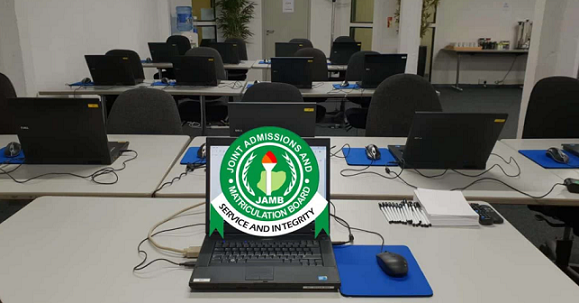
The Joint Admissions and Matriculation Board (JAMB) has revealed plans to introduce a new examination model that will permit candidates to use their personal computers during the Unified Tertiary Matriculation Examination (UTME) beginning from the 2027 examination cycle.
The announcement was made by the JAMB Registrar, Professor Ish-aq Oloyede, during the 2026 Policy Meeting on Admissions into Tertiary Institutions held in Abuja.
According to the Registrar, the initiative forms part of the Board’s broader efforts to modernize the conduct of public examinations in Nigeria while improving operational efficiency and candidate experience.
How the Personal Computer System Will Work
Professor Oloyede explained that the new system would operate under a “Bring Your Own Device” (BYOD) arrangement.
Under the proposed model, candidates will have the option of writing the UTME using their personal laptops or computers instead of relying solely on systems provided at accredited Computer-Based Test (CBT) centres.
To maintain examination security and credibility, JAMB disclosed that special protective measures would be implemented during the examination process.
One of the measures includes the insertion of an official flash drive into each candidate’s device during the examination to control access and minimize opportunities for malpractice.
The Board emphasized that the objective is to combine convenience with strict examination integrity.
Reasons Behind the New JAMB Initiative
The JAMB Registrar stated that the proposed BYOD policy is expected to significantly reduce some of the operational difficulties associated with conducting nationwide CBT examinations.
According to him, the innovation is intended to:
- Reduce examination management costs
- Improve examination efficiency
- Enhance candidate confidence during exams
- Minimize technical disruptions at CBT centres
Professor Oloyede noted that many candidates frequently complain about system failures during examinations, including computers shutting down unexpectedly or malfunctioning under examination conditions.
Allowing candidates to use familiar personal devices may help reduce anxiety and improve overall comfort during the examination process.
Measures to Prevent Examination Malpractice
Despite the flexibility associated with the proposed system, JAMB clarified that examination security would remain a top priority.
The Board assured stakeholders that several control mechanisms would be integrated into the process to ensure fairness, transparency, and credibility.
According to JAMB:
- Personal devices will still be subject to official examination monitoring
- Security software and controlled flash-drive systems will be deployed
- Examination environments will continue to operate under strict supervision
- Anti-malpractice protocols will remain fully active
The Board emphasized that the introduction of personal computers does not eliminate existing examination regulations or monitoring procedures.
Additional Reforms Expected by 2027
Professor Oloyede further disclosed that several other technological reforms and examination improvements are currently at advanced stages of implementation.
According to him, many of the planned reforms have already reached approximately 90 percent completion and are expected to be introduced alongside the BYOD initiative in 2027.
The update was provided while discussing issues relating to:
- The 2025 admission exercise
- 2026 UTME and Direct Entry performance statistics
- Ongoing reforms within Nigeria’s tertiary admission system
What Candidates and Parents Should Know
Although the initiative has generated widespread public interest, JAMB advised candidates and parents to understand that the policy is still in the preparatory stage and will officially commence from 2027.
For now:
- Candidates will continue using approved CBT centres under the current examination system
- JAMB has not abolished centralized examination monitoring
- Detailed implementation guidelines are expected before the 2027 UTME
The Board also encouraged candidates to remain focused on proper academic preparation rather than relying solely on technological familiarity.
Possible Impact on Future UTME Examinations
Educational stakeholders believe the proposed innovation could transform the future of CBT examinations in Nigeria if successfully implemented.
Potential benefits may include:
- Reduced pressure on CBT infrastructure
- Faster examination deployment
- Improved user experience for candidates
- Greater technological flexibility
However, experts also expect JAMB to address challenges relating to:
- Device compatibility
- Internet security
- Standardization of examination environments
- Prevention of cyber-related malpractice
Many observers have described the development as one of the most ambitious technological reforms in Nigeria’s tertiary admission system in recent years.
Final Thoughts
JAMB’s plan to introduce the use of personal computers for UTME candidates from 2027 marks a significant shift in Nigeria’s computer-based examination system.
The proposed BYOD initiative demonstrates the Board’s commitment to leveraging technology to improve examination administration while maintaining strict standards of transparency and credibility.
As preparations continue ahead of the 2027 rollout, candidates, parents, schools, and educational stakeholders are expected to closely monitor further updates and official implementation guidelines from JAMB.
For more verified updates on JAMB policies, UTME news, admissions, scholarships, and educational developments across Nigeria, stay connected with trusted educational platforms such as Edupath Solutions.