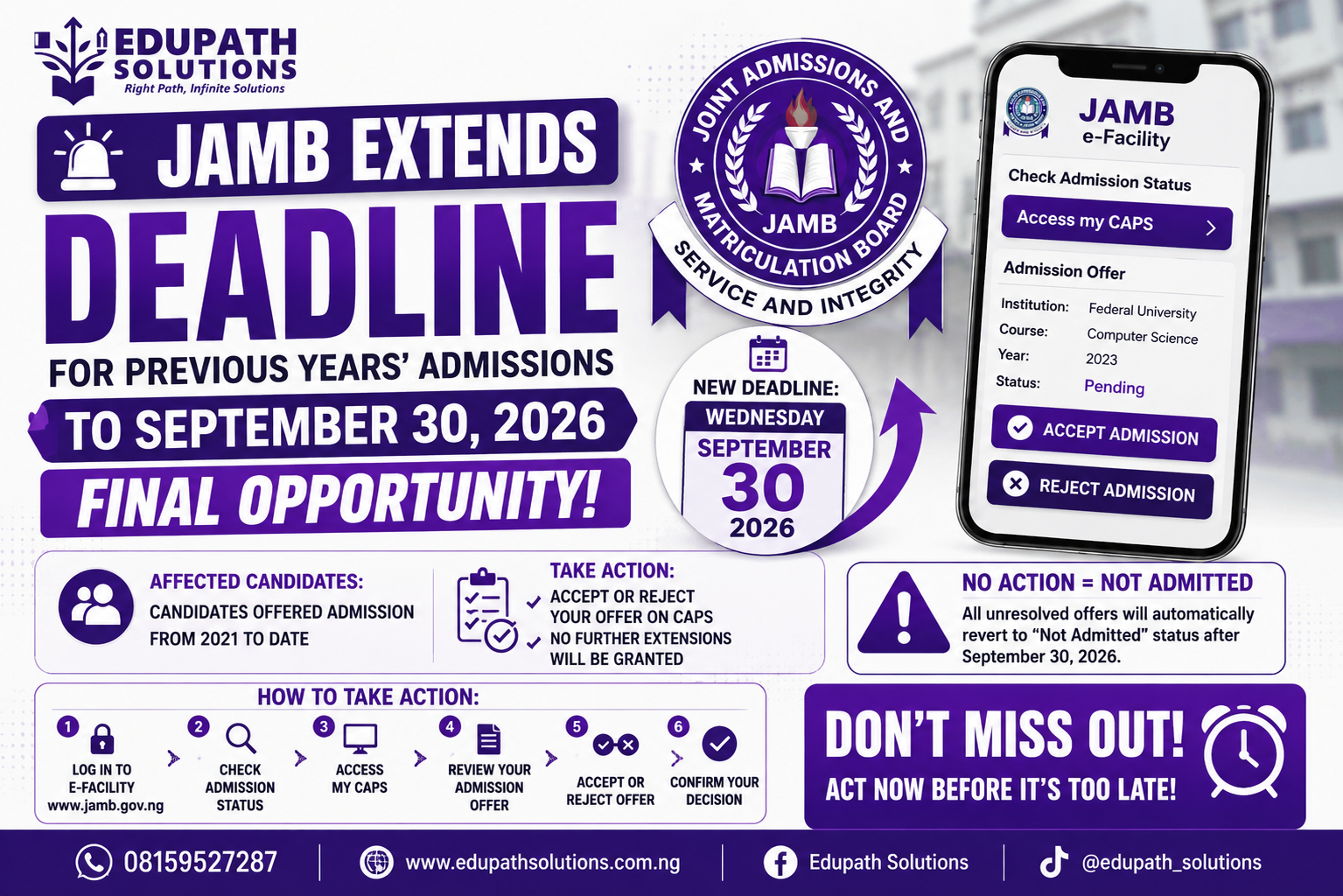
The 2026 JAMB Policy Meeting has become one of the most anticipated educational events in Nigeria, as millions of candidates await official decisions regarding admission benchmarks, institutional requirements, and policy adjustments for the new academic session. According to reports, the meeting is focused on strengthening access to tertiary education while addressing manpower shortages in strategic sectors such as Education and Agriculture.
Educational stakeholders have revealed that candidates applying for programmes within Colleges of Education, Agricultural Science disciplines, and other related courses may receive special admission considerations due to declining enrollment figures in those sectors.
This initiative is designed to encourage more Nigerian students to pursue careers that contribute directly to food security, national development, research, and academic advancement.
Why Education and Agriculture Courses Are Receiving Special Attention
Over the years, Nigerian tertiary institutions have experienced a steady decline in the number of applicants choosing Education and Agriculture-related programmes. Meanwhile, courses like Medicine, Law, Nursing, Computer Science, and Engineering continue to attract extremely high competition.
As a result, policymakers are now considering strategies that would make Education and Agriculture programmes more attractive and accessible to admission seekers.
Experts believe that prioritizing these sectors will help address:
- Shortage of qualified teachers in schools
- Insufficient agricultural professionals
- Food production challenges
- Low youth participation in agriculture
- Gaps in research and innovation
This new direction aligns with the Federal Government’s broader objective of revitalizing Nigeria’s educational and agricultural systems.
What This Means for 2026 UTME Candidates
Candidates intending to study Education or Agriculture-related courses may enjoy improved admission opportunities during the 2026 admission exercise. Although UTME registration remains compulsory for most applicants, institutions may adopt flexible admission considerations, lower competition standards, or special screening measures for these categories of candidates.
However, candidates are strongly advised to continue preparing seriously for the UTME and Post-UTME screening processes pending official confirmation from JAMB and participating institutions.
The Board has consistently emphasized that all admission procedures must follow approved national guidelines and institutional standards.
Candidates Should Avoid Misinformation
Following the circulation of various admission-related rumors online, JAMB has repeatedly urged candidates and parents to rely only on verified updates from official sources. The examination body recently clarified several misleading reports concerning UTME registration policies and admission eligibility.
Students are therefore encouraged to stay informed through trusted educational platforms and avoid false social media claims capable of causing confusion during the admission process.
Final Thoughts
The proposed admission flexibility for Education and Agriculture candidates signals a major shift in Nigeria’s tertiary admission structure. If fully implemented, the policy could create broader academic opportunities for thousands of candidates while strengthening sectors critical to national growth.
As the 2026 admission season progresses, prospective students are advised to remain focused, monitor official announcements, and carefully choose courses that align with both their passion and long-term career goals.
For the latest verified educational news, admission updates, JAMB information, and scholarship opportunities, stay connected with Edupath Solutions